Boat power washing removes salt, algae, mineral film, bird waste, oil residue, and other grime from marine surfaces. The safest method depends on the boat material, stain type, and nearby water. Gentle pressure, proper cleaners, and careful rinsing help protect gelcoat, paint, wood, metal, docks, and seawalls.
A boat may look clean after a quick rinse, yet salt can remain in seams and fittings. Algae can hide under rails, along dock edges, and inside nonskid patterns. A careful cleaning plan helps Pressure Washing Salem Oregon protect the surface while improving the boat’s appearance.
Table of Contents
- What does boat power washing remove?
- How should different boat surfaces be cleaned?
- What pressure washing methods are safe for boats?
- How are docks and seawalls cleaned?
- Can pressure washing damage a boat, dock, or seawall?
- How often should boats, docks, and seawalls be cleaned?
- What should owners consider before booking marine cleaning?
- Frequently Asked Questions
What does boat power washing remove?
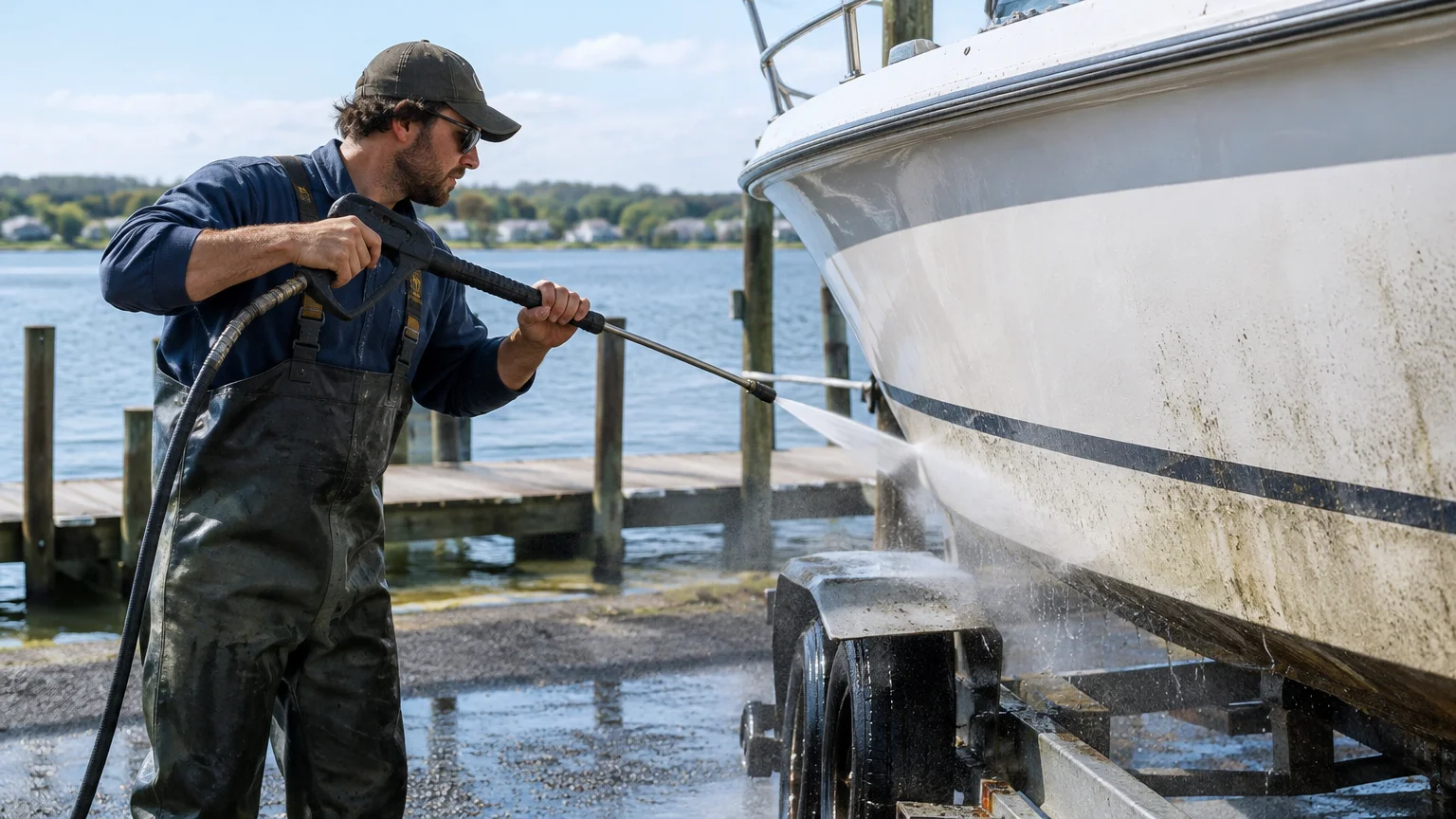
Boat power washing removes surface grime that plain water often leaves behind. It can wash away salt deposits, algae, mineral film, bird waste, light oil residue, and dirt carried by wind or rain. The cleaning method must match the surface, because some stains need a cleaner and gentle rinse rather than strong pressure.
Salt deposits, algae, and mineral buildup
Salt leaves a white or dull film on rails, windows, cleats, and painted areas. If it stays in place, it can collect in seams and around hardware. Fresh water helps with light salt, while a marine-safe cleaner may help remove thicker buildup.
Algae often appears as green, brown, or dark slippery growth. It may form on swim platforms, ladders, dock edges, and seawalls. Mineral buildup can look like chalky spots or hard crusts. These deposits may need careful treatment instead of a forceful spray.
Oil, bird droppings, and environmental residue
Boats can collect fuel film, grease, bird waste, pollen, leaves, and other outdoor residue. Oil marks may need a cleaner made for the surface. Bird waste should be softened before removal, since dry waste can scratch paint or gelcoat during wiping.
A homeowner can safely rinse loose dirt and clean small spots when the boat is stable. The cleaner label must also allow that use. Larger stains, slippery growth, and hard-to-reach areas need more care. Pressure Washing Salem Oregon can help Salem boat owners choose a method that fits the material and residue.
How should different boat surfaces be cleaned?
Different boat materials need different levels of pressure and care. Fiberglass and gelcoat may handle a careful wash, but high pressure can harm a finish or force water into seams. Painted surfaces, metal, upholstery, and delicate fittings need an even softer approach.
Fiberglass, gelcoat, painted surfaces, and metal
Fiberglass is strong, but its outer finish can still become dull or scratched. Gelcoat is the hard protective layer over many fiberglass boats. Cleaners should be tested in a hidden spot before full use. The spray should stay away from decals, vents, seals, and open fittings.
Painted surfaces can chip, fade, or lose their finish when a narrow spray is held too close. Metal rails and hardware may show water spots or corrosion when salt remains around joints. A broad spray pattern and steady movement are safer than holding the wand in one place.
Upholstery, nonskid decks, and delicate fittings
Boat upholstery should not be flooded with strong pressure. Water can enter seams, foam, speakers, switches, and storage areas. A soft brush, mild cleaner, and controlled rinse often work better for seats and cushions.
Nonskid decks need enough cleaning to lift dirt from their texture. Too much force can wear the surface. Lights, navigation parts, canvas, caulking, and electrical fittings also need protection. Homeowners can handle light surface cleaning, but a professional should manage fragile materials or heavy buildup.
What pressure washing methods are safe for boats?
Safe marine cleaning uses the least force that removes the soil. Pressure, water flow, nozzle distance, spray width, and cleaner choice all matter. The goal is not to use the strongest machine. The goal is to clean without harming the finish, seals, fittings, or nearby water.
Choosing pressure, flow, and cleaning solutions
A wide spray pattern spreads force over a larger area. Keeping the wand moving helps prevent marks and surface wear. The operator should begin with low pressure and increase it only when the surface clearly allows more force.
Cleaning solutions should match the material and stain. A boat-safe product may help with salt or organic growth, while a degreaser may be needed for oily residue. Cleaners should never be mixed unless the directions clearly allow it. Runoff should also be controlled so dirty water and cleaners do not enter the waterway.
A homeowner may use a pressure washer for simple exterior rinsing after reading the machine and cleaner instructions. A pressure washing machine rental may seem useful, but the machine still needs the right nozzle, distance, and technique. Using a rental without knowing the surface can cause damage quickly.
Where soft washing and low-pressure rinsing work better
Soft washing uses low pressure with a suitable cleaning solution to loosen organic growth. It is often better for delicate areas, canvas, painted parts, and surfaces near seals. Low-pressure rinsing can remove loosened soil without forcing water into cracks or fittings.
The difference between pressure washing and soft washing is mainly the balance between water force and cleaning solution. Pressure washing relies more on water force. Soft washing relies more on the cleaner and a gentle rinse. Pressure Washing Salem Oregon can assess whether a boat, dock, or seawall needs pressure cleaning, soft washing, or both.
How are docks and seawalls cleaned?
Docks and seawalls collect moisture, sunlight, leaves, algae, and marine growth. Cleaning begins by checking the structure, surface, tide or water level, and nearby plants. Loose debris should be removed first so it does not spread during washing.
Removing algae, slime, barnacles, and marine growth
Algae and slime can make dock boards and steps slippery. A cleaner may loosen the growth before a controlled rinse removes it. Barnacles and hard marine growth can be more difficult. Scraping or aggressive pressure may damage coatings, wood fibers, joints, or masonry.
The operator should look for loose boards, cracked concrete, open joints, rusted fasteners, and damaged caps before cleaning. Washing cannot repair structural problems. It may reveal them more clearly, which helps the owner plan the next repair.
Cleaning wood, composite, concrete, and masonry surfaces
Wood docks need care because strong pressure can cut grooves into soft fibers. The spray should follow the grain and stay far enough away to avoid marks. Composite boards can also show streaks if the nozzle is held too close.
Concrete and masonry can often handle more cleaning force, but cracks and weak joints remain vulnerable. A seawall may also have plants, soil, or landscaping behind it. Runoff should be directed away from sensitive areas when possible. The main Salem area, from South Salem and West Salem to Keizer, Four Corners, Hayesville, Independence, and nearby communities, includes waterfront properties with different access and runoff concerns.
Can pressure washing damage a boat, dock, or seawall?
Yes, pressure washing can damage marine surfaces when the force, nozzle, cleaner, or distance is wrong. Damage may include cut wood, chipped paint, dull gelcoat, torn caulking, damaged seals, and water forced into electrical parts. Careful testing helps reduce these risks.
Common risks from excessive pressure and poor technique
A narrow nozzle can leave lines or remove a finish. Holding the spray in one spot can create a visible mark. Spraying directly into vents, hinges, speakers, lights, and hatch seams can push water where it should not go.
Poor chemical choices can stain metal, weaken fabric, dull paint, or harm nearby plants. Homeowners should stop when a surface changes color, feels loose, or begins to shed material. A small test area is safer than starting with the most visible part of the boat.
Protecting seals, wiring, landscaping, and surrounding water
Before cleaning, covers should protect sensitive controls and loose items should be secured. Doors, hatches, and storage areas should be closed. Electrical parts should not receive a direct spray, even when they appear sealed.
Plants, fish habitats, soil, and nearby water also need protection from dirty runoff and cleaners. Professional cleaners should plan where water will travel and how residue will be contained. A pressure washing service should treat the work area as part of the job, not as an afterthought.
How often should boats, docks, and seawalls be cleaned?
Cleaning should follow the surface condition, use, weather, and amount of exposure. A boat used often in saltwater may need more frequent rinsing than one stored indoors. Docks in shade may collect algae faster than sunny areas, while seawalls may show growth after wet weather.
Signs that marine surfaces need professional cleaning
Several signs suggest that a larger cleaning is due:
- Slippery green or dark growth appears on steps, decks, or dock boards.
- White salt film remains after normal fresh-water rinsing.
- Bird waste, oil marks, or mineral spots cover a large area.
- Surface stains return soon after basic cleaning.
- Access is difficult, unstable, or close to deep water.
- A boat, dock, or seawall has delicate finishes or visible damage.
A homeowner can rinse loose dirt, remove leaves, and clean small areas when safe. Professional help is a better choice for unstable docks, heavy growth, hard-to-reach surfaces, runoff concerns, and stains that need special cleaners.
Seasonal timing, storage preparation, and maintenance habits
Cleaning before storage can keep residue from sitting on the surface for long periods. Another wash may help after a long season of use, storms, or heavy exposure. Regular rinsing can reduce salt buildup, but it does not replace deeper cleaning when stains or growth remain.
Owners should inspect caulking, hardware, boards, fittings, and coatings during routine care. Early repairs are easier to plan when damage is visible. The best schedule depends on the property, water conditions, and how often the boat or dock is used.
What should owners consider before booking marine cleaning?
Marine cleaning is easier to plan when the owner shares clear details about the surface, stain, access, and nearby water. The final scope should be reviewed before work begins, and the final cost is confirmed on a quote. One small boat rinse is very different from cleaning a large dock, seawall, or fleet area.
Owners should explain whether the surface is fiberglass, gelcoat, paint, wood, composite, concrete, masonry, or metal. Photos may help show algae, salt film, oil residue, barnacles, or damage. The owner should also mention fragile fittings, landscaping, storage limits, tide concerns, and past cleaning problems.
A professional cleaner may recommend pressure washing, soft washing, hand cleaning, or a mix of methods. The best option removes the soil while protecting the finish and surrounding environment. For waterfront properties around Salem, Pressure Washing Salem Oregon can help owners plan the next step.
Frequently Asked Questions
Can a pressure washer clean a fiberglass boat?
A pressure washer can clean some fiberglass boats when used with low force, a wide spray, and the right distance. Gelcoat, decals, seals, vents, and fittings can still be damaged by a close spray. Light rinsing may be suitable for a homeowner, while heavy stains need a careful cleaning plan.
What removes salt from a boat?
Fresh water removes light salt film when rinsed soon after use. A marine-safe cleaner may help with thicker deposits around rails, seams, cleats, and fittings. The surface should be rinsed well afterward. Owners should avoid harsh products that can dull paint, damage metal, or harm nearby water.
Is soft washing better than pressure washing for a dock?
Soft washing may be better for delicate wood, painted areas, and docks with loose coatings. It uses a suitable cleaner and low pressure to loosen organic growth. Stronger pressure may help on sound concrete or masonry, but the operator should test the surface first and protect nearby plants.
Can boat power washing remove barnacles?
Boat power washing may remove loose marine growth, but firmly attached barnacles can require careful scraping and spot treatment. Strong pressure can damage gelcoat, paint, wood, or protective coatings. The surface should be checked after removal because barnacles may leave marks, pits, or damaged areas behind.
Who cleans solar panels near me, and can the same team clean boats?
Some pressure washing companies clean both solar panels and marine surfaces, but the methods are not the same. Solar panels need gentle cleaning and careful water control, while boats may need surface-specific cleaners. Owners should confirm that the team has experience with the exact material before booking either service.
Key Takeaways
- Boat power washing can remove salt, algae, mineral film, bird waste, oil residue, and outdoor grime.
- Fiberglass, gelcoat, paint, wood, metal, upholstery, and composite surfaces need different care.
- Low pressure and soft washing often work better for delicate areas and organic growth.
- Excessive force can damage finishes, seals, wiring, caulking, landscaping, and nearby water.
- Homeowners can handle light rinsing, but heavy growth, unsafe access, and fragile surfaces need professional help.
Contact us to plan careful marine cleaning for a boat, dock, or seawall.