Dumpster pad pressure washing removes grease, food scraps, drink spills, dirt, and organic buildup from concrete and nearby walls. It can also reduce odor sources and germs when the right heat, pressure, cleaning products, and wastewater controls are used. The best method depends on the surface, waste, access, and drainage around the pad.
A dirty dumpster area affects more than curb appeal. It may create strong smells, attract pests, stain concrete, and make a business look poorly cared for. For property owners and managers in Salem, regular cleaning helps keep waste areas safer, cleaner, and easier to manage.
Pressure Washing Salem Oregon helps Salem business owners choose a cleaning plan that fits the property, waste volume, and access needs. The sections below explain what professional cleaning removes, how it works, and how staff can help keep the enclosure cleaner between visits.
Table of Contents
- What does dumpster pad pressure washing remove?
- Why do dumpster pads develop grease, odors, and bacteria?
- How does pressure washing clean a dumpster pad?
- Can pressure washing remove dumpster pad odors?
- What should businesses know about wastewater from dumpster pad cleaning?
- How often should commercial dumpster pads be pressure washed?
- How can businesses maintain a cleaner dumpster enclosure?
- Key takeaways
- Frequently Asked Questions
- Conclusion
What does dumpster pad pressure washing remove?
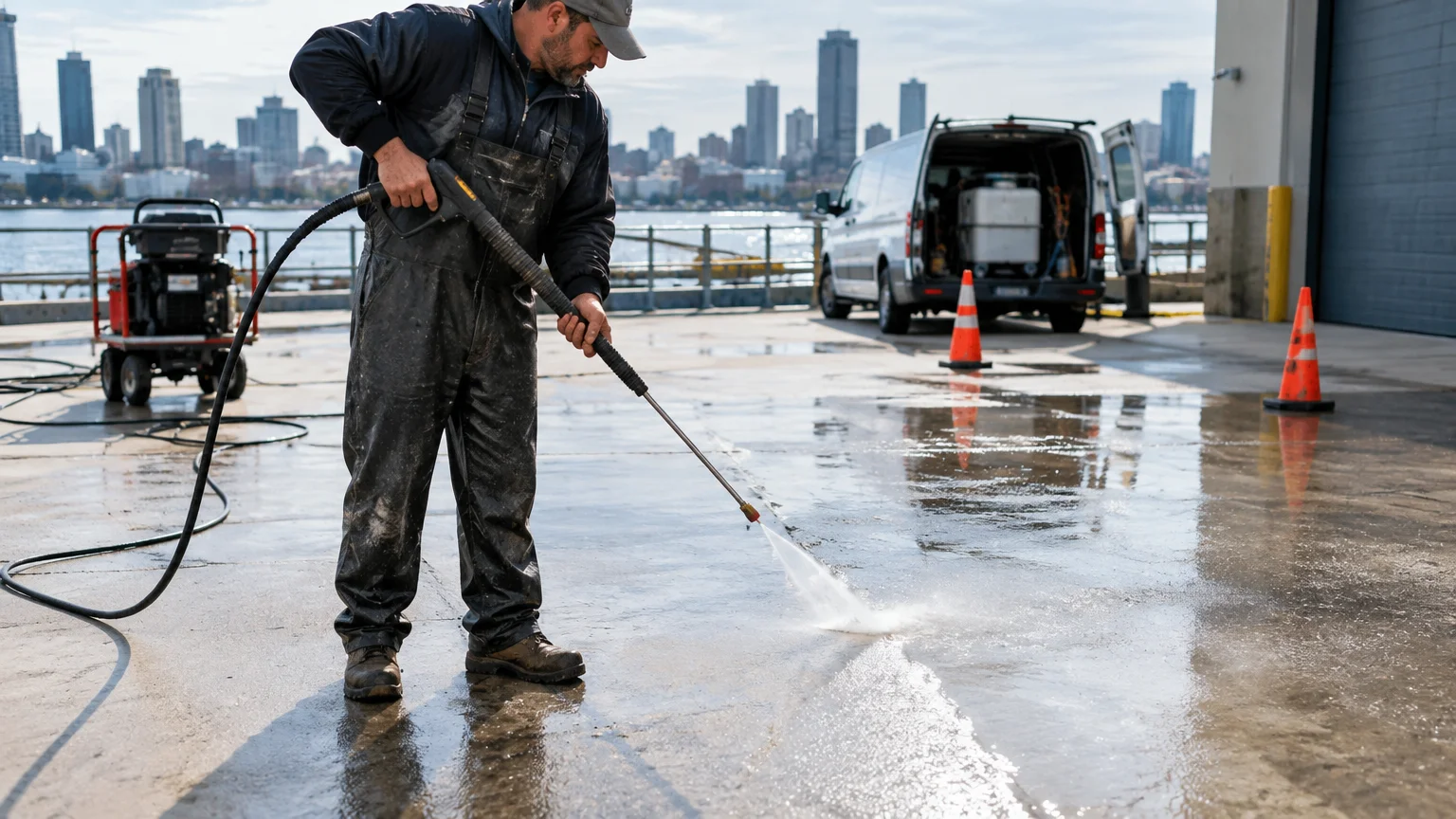
Dumpster pad pressure washing removes grime that sticks to concrete, curbs, enclosure walls, and nearby service areas. A strong cleaning can lift grease, food residue, spilled drinks, soil, leaves, and other organic matter. It leaves fewer places for smells and germs to remain.
Grease, food residue, and organic buildup
Grease often comes from restaurants, grocery stores, kitchens, and food service areas. Bags may leak while workers move them. Containers can also drip after staff pour out liquids. Over time, these spills enter concrete pores and form a dark, sticky layer.
Food residue can include oils, sauces, dairy products, meat juices, and sweet drinks. Organic buildup means material from plants, animals, or food. It can break down in warm, wet areas and create a foul smell. Pressure washing helps remove this layer from the surface.
A cleaning crew may also wash walls, gates, curbs, wheel stops, and the area below the dumpster. These places can hold splash marks that a broom cannot remove. Cleaning the full enclosure gives the area a more complete result.
Odors, bacteria, and other contaminants
Washing removes many odor-causing materials, but it does not make every surface sterile. Bacteria can grow where food, moisture, and warmth remain together. A proper cleaning removes the soil that helps these organisms stay on the surface.
Other contaminants may include mold-like growth, dust, sludge, and residue from leaking waste. The cleaning method must match the surface. Too much pressure can harm paint, soft masonry, sealants, or old concrete. The goal is a clean surface without new damage.
Why do dumpster pads develop grease, odors, and bacteria?
Dumpster pads become dirty because waste areas receive repeated spills, leaks, traffic, and weather. The problem grows when a pad is not cleaned after a leak. Small spills can become a thick coating when more dirt sticks to them.
How leaking bags and spilled liquids create buildup
Trash bags can tear when workers move them or sharp waste presses against them. Liquid may also escape from food containers, boxes, cans, and broken packages. That liquid can run under the dumpster or into cracks in the pad.
Many liquids contain oils or sugars. These substances cling to concrete and collect dust. A broom may remove loose debris, but it usually cannot remove the film left behind. Plain water may spread the residue instead of lifting it.
Dumpsters can also leave marks when moved. Wheels and metal edges push grime across the pad. Repeated movement creates dark tracks and packed dirt near the enclosure entrance.
Why heat, moisture, and poor drainage make conditions worse
Warm weather speeds up the breakdown of food and other organic waste. Moisture helps residue spread and gives bacteria a place to grow. Shade can keep the pad damp after rain or washing.
Poor drainage adds another problem. Water may collect beside the dumpster instead of flowing away. This can leave sludge, stains, and strong odors behind. A blocked drain or low spot may need attention before the area can stay clean.
Staff should report leaks quickly. They should keep lids closed when possible and avoid placing loose waste beside the container. These steps do not replace cleaning, but they can slow new buildup.
How does pressure washing clean a dumpster pad?
Professional pressure washing begins with inspection and preparation. The crew checks the surface, moves safe items when possible, and removes loose trash before using water and cleaning products. This helps prevent debris from spreading across the property.
Surface preparation and debris removal
The first step is usually a visual check. The cleaner looks for oil-like residue, food waste, blocked drains, loose coatings, damaged concrete, and stains that need special care. They also consider nearby doors, walls, plants, cars, and customer walkways.
Loose cardboard, plastic, food scraps, and other waste should be removed before washing. Staff may need to work with the waste company so the dumpster can be moved or emptied. A clear pad gives the cleaner better access to the surface.
The crew may protect nearby doors, walls, plants, and equipment. They can also sweep or collect solid debris so it does not enter a drain. Good preparation makes the cleaning safer and more controlled.
Hot water, pressure, and suitable cleaning solutions
Hot water can help loosen grease and food residue. Pressure then carries the loosened material away from the concrete. The correct setting depends on the surface, age, coating, and level of buildup.
Cleaning solutions may help break down oils that water alone cannot lift. The product should suit the surface and follow its label directions. Some areas may need a separate treatment for odors or biological residue.
Pressure washing is not the same as soft washing. Pressure washing uses stronger water force for durable surfaces. Soft washing uses lower pressure and cleaning products for surfaces that could be damaged by force. A professional chooses the safer method for each part of the enclosure.
Can pressure washing remove dumpster pad odors?
Yes, dumpster pad pressure washing can reduce odors when smells come from residue on the pad, walls, or nearby surfaces. Cleaning removes much of the food, grease, and waste film that feeds the smell. Odors may return if leaks, standing water, or spoiled waste continue.
How cleaning reaches odor-causing residue
Strong smells often come from material that is easy to miss. Residue may sit under the dumpster, along the curb, behind a gate, or in cracks. Careful cleaning reaches these areas when access is safe.
The crew may clean the pad, enclosure walls, gate, wheel stops, and the surface around the container. This reduces the amount of residue left behind. It also keeps a clean area from picking up odor from a dirty nearby wall.
Odor control works best when the source is removed. Spraying a scent over a dirty pad may hide the smell for a short time, but it does not solve the cause. Businesses should fix leaking bags, damaged containers, and poor drainage when those problems continue.
When deodorizing and sanitation treatments may be needed
Some dumpster areas need more than water and pressure. A deodorizing treatment may help after heavy food spills or long-term buildup. A sanitation treatment may also help after a major leak.
These treatments should match the surface and the residue. They should not be used near food preparation areas without proper care. Staff should follow product directions and keep people away from wet treatment areas until they are ready for use.
No cleaning method can promise that an enclosure will stay odor-free. Waste handling, weather, drainage, and pickup timing all affect results. Regular service works best with daily care.
What should businesses know about wastewater from dumpster pad cleaning?
Wastewater from dumpster pad cleaning may contain grease, food residue, dirt, cleaning products, and other contaminants. It should be controlled so it does not run into storm drains, landscaping, neighboring property, or public walkways. Safe wastewater handling is a key part of professional commercial cleaning.
Why wastewater containment matters
Storm drains carry rainwater away from streets and properties. They are not made for dirty wash water. If wastewater reaches a storm drain, it can carry grease and waste into local waterways.
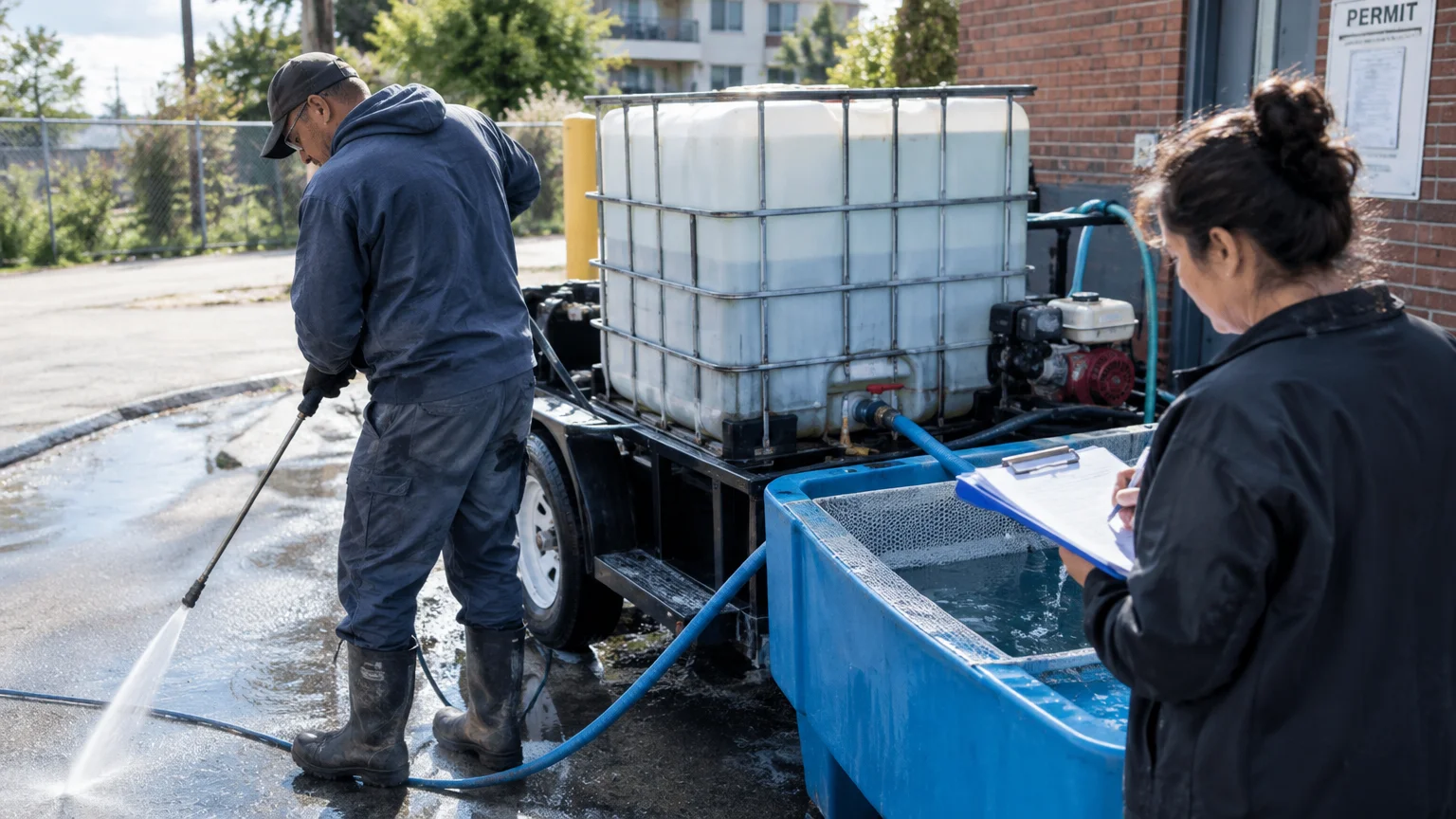
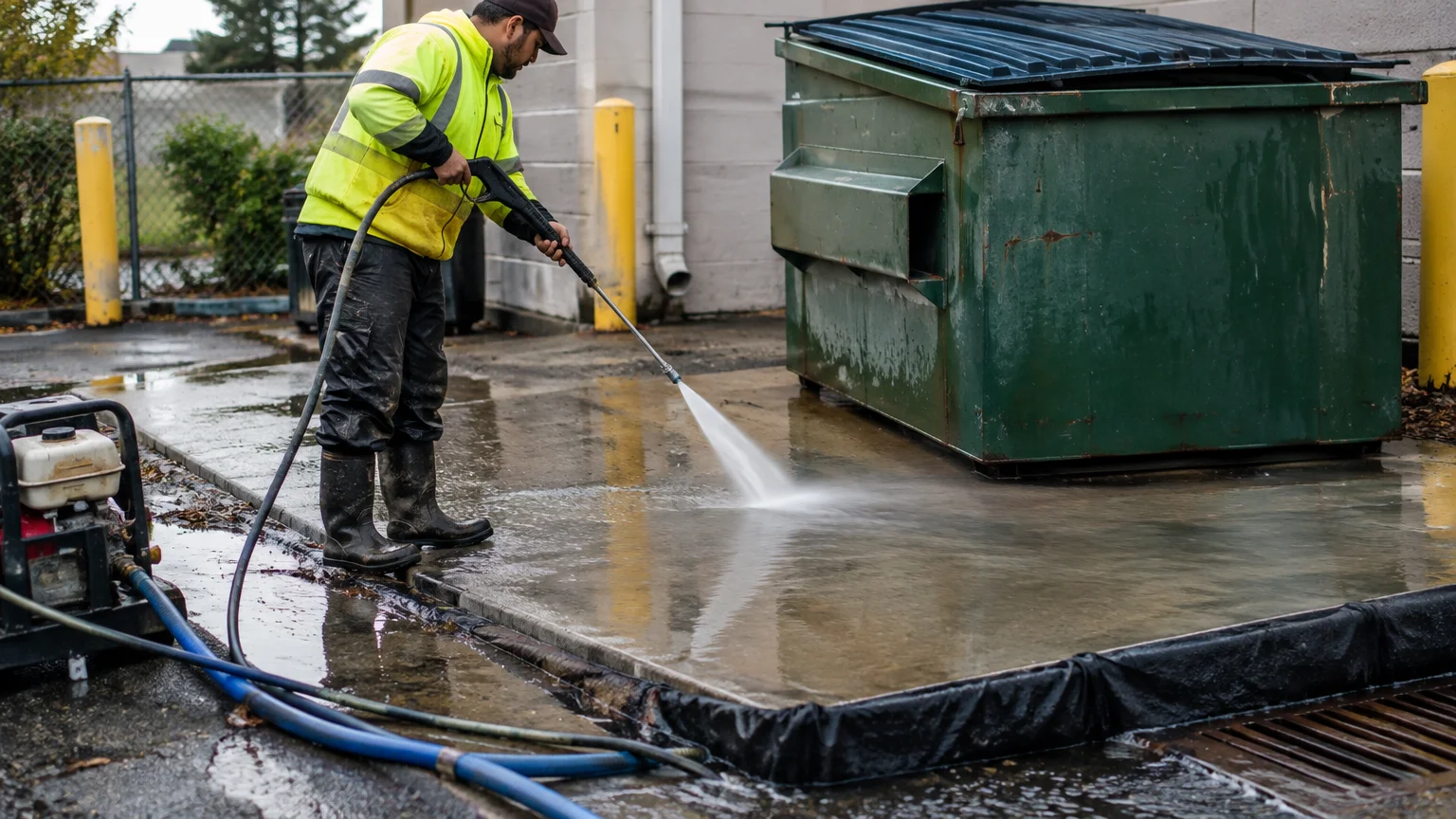
A cleaning crew should review the site before starting. They may use drain covers, berms, wet vacuums, recovery tanks, or other controls. The right choice depends on the layout, slope, drain location, and local rules.
Businesses should ask how the crew plans to manage wastewater. This shows care for nearby areas and responsible work. It also helps prevent delays when the pad sits near a sidewalk or parking lot.
How professional cleaning helps protect drains and surrounding areas
Professional cleaners plan water flow before they wash. They can collect dirty water, keep solids out of drains, and rinse the surface in a controlled way. They also know when a job needs more equipment or another cleaning method.
A property manager should point out drains, low spots, loading areas, doors, and nearby tenant spaces before work begins. Staff should keep customers and vehicles away from the work area. These steps help reduce slip risks and protect nearby surfaces.
The business remains responsible for its property and waste practices. A cleaning plan should support, not replace, good dumpster placement, leak control, and safe waste handling.
How often should commercial dumpster pads be pressure washed?
There is no single schedule for every business. A restaurant, apartment property, office building, and retail store may need different service times. Cleaning frequency depends on waste volume, food waste, leaks, weather, drainage, traffic, and pad condition.
Factors that affect a cleaning schedule
Food businesses often need more frequent cleaning because grease and liquid waste build up faster. Properties with many tenants may also see more spills. A covered enclosure may stay cleaner than an open pad, but it can still hold moisture and odors.
A business should review the area during normal property checks. Notes can include the date of a leak, odor complaints, visible stains, standing water, and cleanup needs. These notes help managers set a practical recurring plan.
Cleaning may be needed after a major spill, leaking container, storm, or construction work. A recurring commercial cleaning plan can then handle normal buildup before it becomes hard to remove.
Signs a dumpster enclosure needs prompt attention
A dirty enclosure can affect workers, tenants, customers, and nearby businesses. These signs suggest that the area needs attention soon:
- A strong smell remains after trash pickup.
- Grease or dark liquid covers the concrete.
- Bags leak often inside or beside the dumpster.
- Standing water remains near the container.
- Flies, insects, or other pests gather around the pad.
- Customers or staff report slippery or dirty walking areas.
These signs do not always mean pressure washing is the only answer. A damaged dumpster, blocked drain, or waste pickup problem may need correction too. The best plan addresses both the visible soil and the reason it keeps returning.
How can businesses maintain a cleaner dumpster enclosure?
Businesses can reduce buildup with simple daily and weekly habits. Staff should keep waste inside the container, report leaks, and remove loose trash from the enclosure. Regular checks help catch problems before they spread to walls, sidewalks, or parking areas.
Daily and weekly practices for staff
Daily care should focus on spills and loose waste. Employees should use the approved cleanup process for the property and avoid pushing dirty liquid toward a storm drain. They should also report sharp objects, broken gates, damaged lids, and unsafe walking surfaces.
Weekly checks can look for stains, standing water, odors, pests, and residue under the dumpster. Managers should confirm that the enclosure stays easy to access and that service vehicles can reach the container safely.
Useful habits include:
- Keep dumpster lids closed when possible.
- Place waste fully inside the container.
- Clean small spills soon after they happen.
- Keep cardboard and loose trash off the pad.
- Report leaks to the waste company and property manager.
- Keep drains and access paths clear of debris.
When to schedule recurring commercial cleaning
Recurring cleaning makes sense when a property has steady waste volume or repeated spills. It can help restaurants, shopping centers, offices, apartment communities, and other commercial sites maintain a cleaner standard.
The schedule should follow actual site conditions. A manager may start with a condition review, then adjust timing after watching odor, grease, and leak patterns. Building washing, parking lot cleaning, and other exterior services may also fit the same property care plan.
Pressure Washing Salem Oregon serves commercial properties, South Salem, West Salem, Keizer, Four Corners, Hayesville, Independence, and nearby communities. The team can help managers review access issues, surface risks, drainage concerns, and areas staff may miss.
Key takeaways
- Dumpster pad pressure washing removes grease, food residue, dirt, and organic buildup.
- Odor control works best when residue and the leak source are both addressed.
- Hot water, suitable products, and careful pressure can clean durable surfaces.
- Wastewater should be contained before it reaches drains or nearby areas.
- A recurring plan should match waste volume, spills, weather, drainage, and property use.
Frequently Asked Questions
Is dumpster pad pressure washing safe for concrete?
It can be safe when the cleaner chooses the right pressure, heat, and products. Old, cracked, painted, or sealed surfaces need extra care. The area should also be checked for loose edges and damage before washing. Proper setup helps prevent damage and controls dirty wastewater.
Can pressure washing remove a grease stain completely?
Pressure washing can remove much of the grease and residue on a dumpster pad. Older stains may have soaked deep into porous concrete and may need more than one treatment. Results depend on stain age, surface condition, cleaning solution, and how quickly the spill is handled.
Can employees clean a dumpster pad themselves?
Employees can handle small amounts of loose trash and minor surface debris when the property has an approved process. They should not handle unknown liquids, sharp waste, or heavy buildup without proper training and equipment. Professional cleaning is a better choice for large spills, strong odors, difficult access, or wastewater concerns.
What is the difference between pressure washing and soft washing?
Pressure washing uses stronger water force to clean durable surfaces such as concrete. Soft washing uses lower pressure and cleaning products for surfaces that force may damage. A dumpster pad often needs pressure washing, while nearby painted walls, signs, or delicate materials may need a gentler method.
Can cleaning stop dumpster odors forever?
Cleaning can greatly reduce odors caused by grease, food, and waste residue. It cannot stop smells forever if bags keep leaking, water collects, or waste remains outside the container. Better results come from closed lids, quick spill response, good drainage, and regular waste pickup.
Conclusion
A clean dumpster enclosure supports a safer and more pleasant commercial property. Dumpster pad pressure washing removes buildup that ordinary sweeping cannot handle. It can also reduce odors when the source is surface residue. Businesses should still manage leaks, standing water, loose waste, and wastewater.
Pressure Washing Salem Oregon can help plan commercial exterior cleaning around actual site conditions. Contact us to arrange dumpster pad pressure washing for your property.