The safest way to learn how to pressure wash a driveway is to use gentle pressure, the right nozzle, and even passes. First, check the concrete, clear the area, and treat stains. Keep the spray moving and rinse from high to low. These steps help remove dirt without etching or streaking the surface.
Table of Contents
- What should you do before pressure washing a driveway?
- What pressure washer settings are safest for concrete?
- How do you apply driveway cleaner before pressure washing?
- How should you pressure wash a driveway without leaving streaks?
- How can you remove oil stains, algae, and tire marks from concrete?
- What causes concrete etching and how can you prevent it?
- How should you rinse, dry, and maintain a pressure-washed driveway?
- Frequently Asked Questions
- Key Takeaways
- Conclusion
What should you do before pressure washing a driveway?
Before washing, move cars, toys, pots, mats, and other loose items. Sweep away leaves, sand, and small stones. Check where the water will run. Dirty water should not collect near a garage, door, plant bed, or drain that leads to a waterway. Good driveway washing prep makes the job safer and helps prevent new stains.
Gather the right equipment and cleaning supplies
You may need a pressure washer, garden hose, safety glasses, gloves, strong shoes, a stiff broom, and a cleaner made for driveways. A surface cleaner can wash large areas more evenly than a spray wand. This tool has a round cover that keeps the spray at a steady height above the concrete.
Choose a cleaner that matches the surface and stain. Read the label because some products can harm grass, plants, paint, or nearby stone. Keep clean water nearby to rinse plants and tools. Pressure Washing Salem Oregon provides Driveway Cleaning Services for Salem property owners who would rather have this work handled by a trained team.
Inspect the concrete and prepare the surrounding area
Look for cracks, loose pieces, flaking spots, old repairs, and joints with missing filler. Pressure washing cannot fix weak concrete. Strong spray may widen damaged spots when aimed too close. Move outdoor furniture away and cover items that could be harmed by water or cleaner.
Test a small, hidden area first. Look for color changes, loose material, or lines that stay after the test dries. If the driveway has fresh sealer, follow the sealer maker’s waiting instructions. Tenants should ask the property owner before using a pressure washer.
What pressure washer settings are safest for concrete?
Moderate pressure and a wide spray are safer than maximum power. The best setting depends on the concrete’s age, strength, finish, and condition. Start with the lowest setting that removes surface dirt. Never hold the wand in one place.
Choose the right nozzle, pressure, and spray distance
A wide-angle nozzle spreads water across more concrete. This lowers the chance of damage. Narrow, strong tips can cut soft spots and leave clear marks. Hold the wand at a steady height and test the spray before cleaning the main area.
Old, worn, or decorative concrete needs extra care. Keep the wand moving in smooth lines. Use the distance that cleans without pulling at the surface. If the spray leaves a sharp, bright line, it is too close, too strong, or moving too slowly.
When should you use a surface cleaner instead of a wand?
A surface cleaner often works best on large, flat driveways. Its covered spray bars stay at an even height. This helps prevent zebra-like streaks. Move slowly enough to clean, but do not let water sit in one spot.
A wand still helps around edges, corners, steps, and narrow strips. Use a broad spray and steady movement. A wand may also give better control on sloped or uneven concrete. Professionals may use both tools during Concrete Cleaning Services, based on the surface condition.
How do you apply driveway cleaner before pressure washing?
Driveway cleaner helps loosen grime before water removes it. Sweep first, wet nearby plants, apply the product evenly, and follow the label. The cleaner works best when it stays wet for the stated dwell time. Dwell time means how long a solution stays on a surface before rinsing.
Match the cleaning solution to the type of stain
General dirt may respond to a mild concrete cleaner. Oil and grease often need a degreaser. Algae and mildew may need a product made for organic growth. A cleaner made for siding, wood, or indoor floors may not be safe for concrete.
Never mix cleaning chemicals. Some mixtures can make harmful fumes or damage the driveway. Protect your eyes and skin. Keep children and pets away from the work area. Follow the product label. Test a small section to see if the cleaner changes the concrete color.
Allow proper dwell time without letting the solution dry
The cleaner should stay wet while it works. On a hot or windy day, wash smaller sections. A light water mist may help keep the product active, but the label should guide you.
If the cleaner dries, it may leave a film or uneven marks. Rinse that area before adding more product. Direct water away from doors, garages, drains, and delicate plants. Local rules may also limit where wash water can flow in Salem.
How should you pressure wash a driveway without leaving streaks?
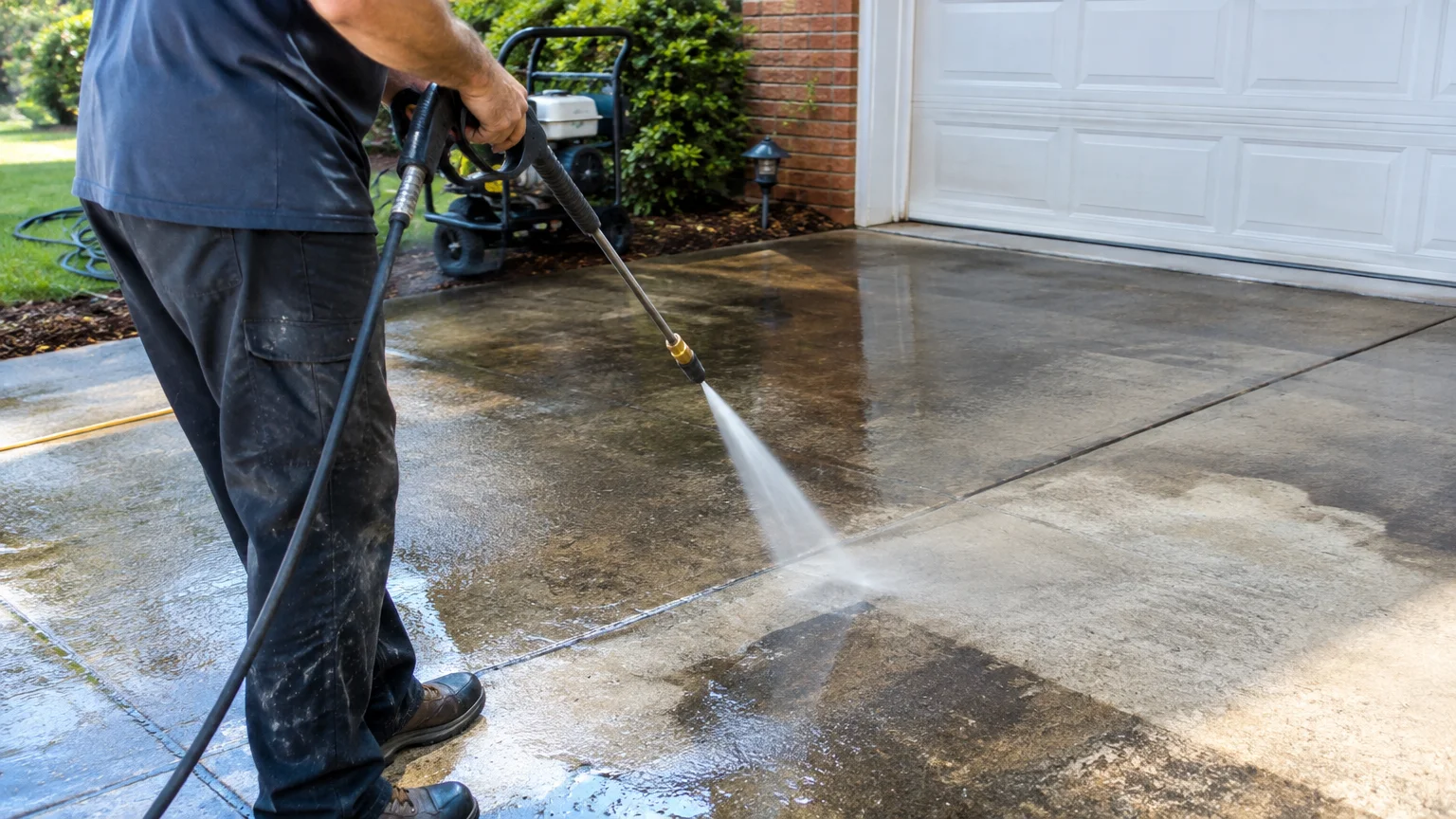
The key is to use steady, overlapping passes. Divide the driveway into smaller sections and finish each one before moving on. A steady pace helps prevent stripes caused by missed areas or changes in spray distance.
Use consistent passes and overlapping cleaning patterns
Move the wand or surface cleaner in straight lines. Let each pass overlap the last one slightly. Do not wave the wand in random arcs. Curved movements can leave curved marks and uneven cleaning.
Keep the nozzle at about the same height during each pass. Do not stop while pulling the trigger. If a dirty line remains, clean it again after the first pass. Chasing one spot with a narrow spray can cause more damage than it removes.
Work from the highest point toward the drainage area
Cleaning from high to low lets dirty water move away from finished areas. Start near the garage or upper edge. Then move toward the street or planned drainage area. This helps keep runoff from passing over sections that are already clean.
Edges may need a slower pass, but do not aim the spray into cracks or joints. Rinse with clean water using the same high-to-low pattern. Watch for pools of water. They may point to blocked drainage or a low area.
How can you remove oil stains, algae, and tire marks from concrete?
Different stains need different care. Fresh oil, old grease, organic growth, and tire marks do not respond in the same way. Pressure washing can remove surface buildup, but deep stains may remain because concrete is porous. Porous concrete has tiny openings that can hold water and dirt below the surface.
Treat deep oil and grease stains
Absorb fresh oil with a suitable material before washing. Collect the used material and dispose of it under local rules. A concrete-safe degreaser can then break down the remaining film before rinsing.
Old oil marks may need more than one treatment. Do not force grease deeper into the slab with a narrow, strong spray. If a dark shadow remains, more pressure may not solve it. A professional can check whether the mark is on the surface or inside the concrete.
Clean organic growth and dark surface buildup
Algae, mildew, and moss grow more easily where concrete stays damp and shaded. A cleaner labeled for that growth can help loosen it. Protect plants and rinse nearby surfaces as the product label directs.
Tire marks may respond to a mild cleaner and stiff brush before washing. Work gently near decorative finishes and painted lines. Driveway Cleaning Services can help Salem homeowners with stubborn stains and uneven cleaning risks.
What causes concrete etching and how can you prevent it?
Concrete etching happens when force or chemicals remove part of the surface. It can leave rough spots, pale lines, or clear spray marks. Common causes include a narrow nozzle, too much pressure, close spraying, harsh chemicals, and slow movement. Etching is surface damage, not dirt that another rinse can remove.
Avoid common mistakes that damage driveway surfaces
The most common mistakes include:
- Using a narrow nozzle on old or weak concrete
- Holding the spray in one place
- Working too close to the surface
- Skipping a small test area
- Letting cleaner dry on the driveway
- Aiming strong spray into cracks or loose edges
A homeowner does not always need a professional. Sweeping, light rinsing, and simple spot cleaning are often safe when the concrete is sound. Professional help makes more sense when the driveway is badly cracked, flaking, deeply stained, hard to drain, or too large to control safely. The same is true when runoff may harm nearby plants or waterways.
Know when pressure washing is not suitable for the concrete
Very soft, damaged, decorative, or recently repaired concrete may not suit strong pressure. Pavers can also lose joint sand when cleaned too hard. Lower pressure, a gentler method, or another cleaning process may be safer.
When the surface condition is unclear, stop after testing a hidden section. Pressure Washing Salem Oregon can help Salem property owners decide whether pressure washing suits the driveway. Its team can also discuss Concrete Cleaning Services for patios, walkways, and other hard surfaces.
How should you rinse, dry, and maintain a pressure-washed driveway?
A final rinse should remove cleaner and loose soil from the highest point toward the drainage area. After rinsing, inspect the driveway from several angles. Wet concrete can hide missed spots, so check the surface again as it dries.
Check the finished surface and address missed areas
Look for oil shadows, cleaner film, streaks, and pools of water. Treat missed areas gently instead of attacking them with more pressure. If the driveway looks uneven while wet, wait until it dries before deciding whether another pass is needed.
Check nearby walls, garage doors, plants, and walkways for splashback. Rinse those areas when needed. The finished surface should look clean and even. It should not have rough lines, exposed aggregate, or damaged edges.
Create a practical maintenance routine for residential driveways
Regular sweeping helps keep grit from grinding into the concrete. Absorb and clean spills soon after they happen. Do not let leaves or damp debris sit in shaded areas for long periods.
Inspect the driveway during seasonal yard work and after heavy storms. Address small cracks before water reaches the base. A property owner in the main Salem area, including South Salem, West Salem, Keizer, Four Corners, Hayesville, and Independence, may also use Driveway & Walkway Cleaning Benefits when planning routine care. Pressure Washing Salem Oregon serves local property owners who need a careful cleaning plan.
Frequently Asked Questions
Can pressure washing damage a concrete driveway?
Yes, pressure washing can damage concrete when the force is too strong or the nozzle is too narrow. Holding the spray still can also leave etching. Start gently, test a hidden spot, keep the wand moving, and avoid damaged or flaking areas.
What cleaner should be used when pressure washing concrete?
The right cleaner depends on the stain. A mild concrete cleaner may handle dirt, while a degreaser suits oil and grease. Organic growth may need a product labeled for algae or mildew. Follow the label and never mix cleaning chemicals.
Is a surface cleaner better than a pressure washer wand?
A surface cleaner is often better for broad, flat areas because it keeps the spray more even. A wand is useful around edges, steps, corners, and uneven sections. Many driveway cleaning jobs use both tools. The best choice depends on the concrete and equipment.
How often should a driveway be pressure washed?
There is no single schedule for every driveway. Shade, trees, traffic, spills, drainage, and local weather all affect buildup. Sweeping and quick spill cleanup can reduce the need for deep cleaning. Wash the surface when dirt or growth returns, but do not use pressure washing in place of repairs.
Can a homeowner pressure wash a driveway without professional help?
Yes, a homeowner can handle light dirt when the concrete is sound and the equipment is used carefully. Professional help makes more sense for deep oil, large areas, damaged concrete, poor drainage, or uncertain runoff. Inspect the surface before choosing a cleaning method.
Key Takeaways
- Inspect the driveway first for cracks, flaking, loose edges, and poor drainage.
- Use moderate pressure and a wide spray before trying stronger settings.
- Match the cleaner to the stain and keep it wet during dwell time.
- Clean with steady, overlapping passes from high areas toward drainage.
- Stop when the surface looks weak or damaged and seek trained guidance.
Conclusion
Learning how to pressure wash a driveway safely takes more care than turning up the machine. A sound surface, suitable cleaner, steady passes, and a full rinse can remove buildup without etching the concrete. The right method also helps limit streaks, runoff problems, and avoidable surface repairs.
For help choosing a safe approach, Contact us at Pressure Washing Salem Oregon to discuss your driveway and next steps.
If you are not sure what you are dealing with, it is worth having someone look at it before it turns into a bigger job. Get in touch with Pressure Washing Salem Oregon today and we will tell you where you stand.