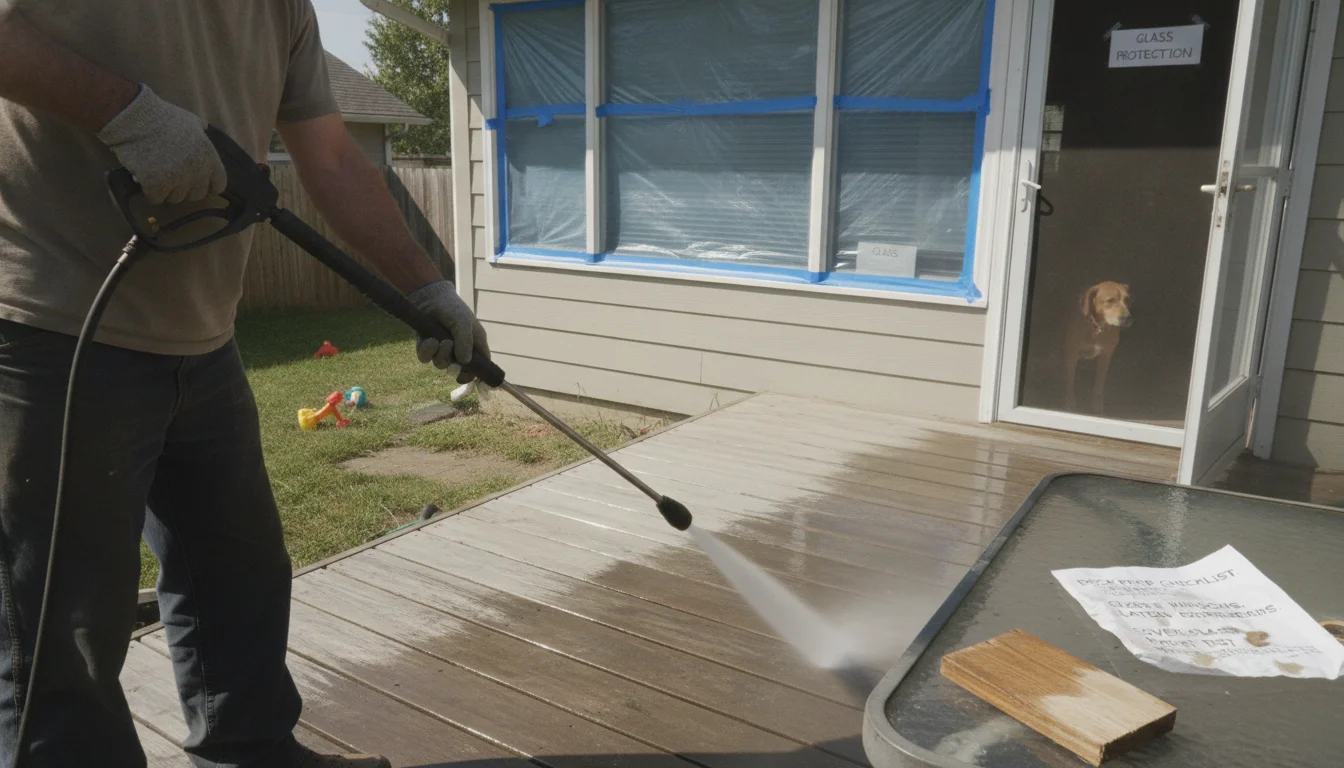
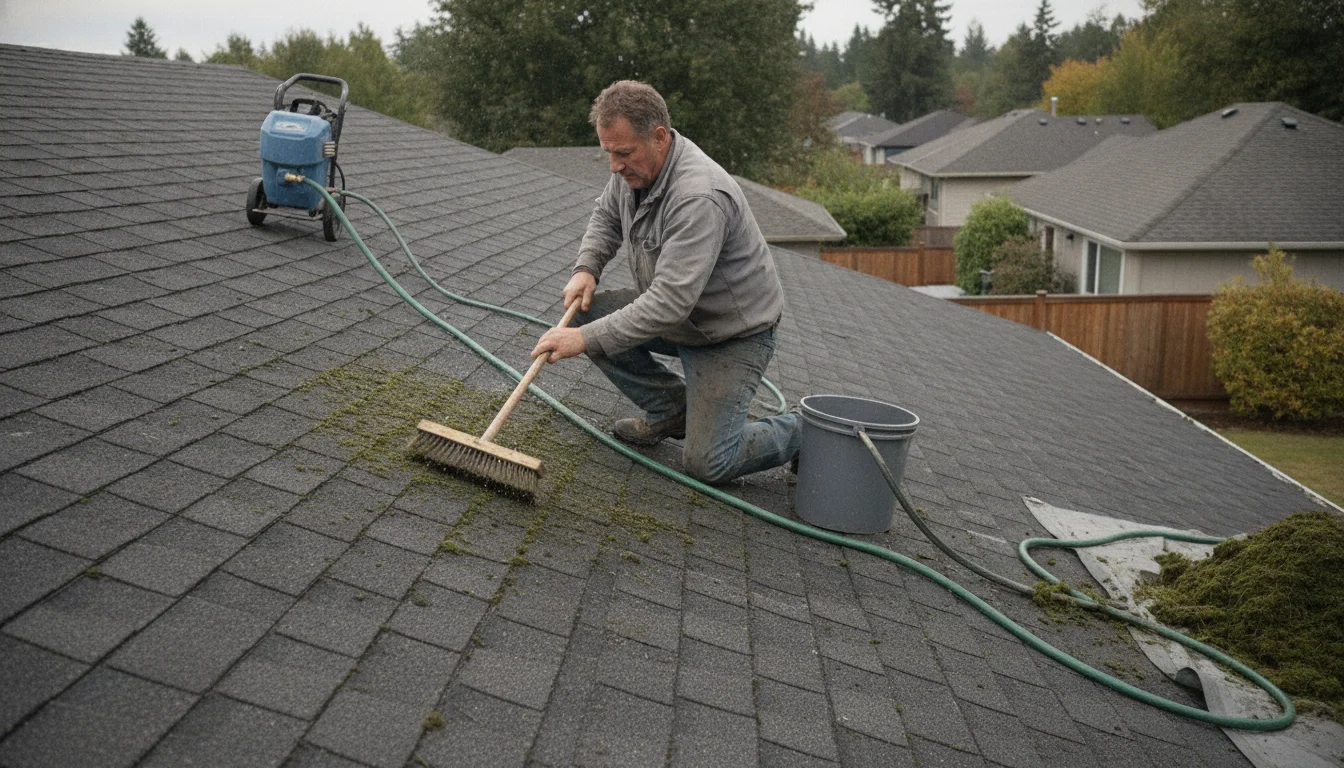
Soft washing stucco is the low-pressure, detergent-based method that removes algae, mildew, and grime without harming the finish. In Salem’s damp climate, this approach prevents water intrusion and etching while keeping exterior walls cleaner for longer.
Dark streaks on stucco can appear fast in the Willamette Valley. One week the wall looks fine; the next, green spots, black lines, and chalky residue show up. Many people reach for a pressure washer, but that force can break the finish and drive water into hairline cracks. The safer fix is soft washing, which relies on chemistry and controlled flow instead of brute pressure. Around Salem, this method protects homes and helps walls stay clean between washes.
Pressure Washing Salem Oregon trains technicians to treat stucco the right way. The team understands that forcing water into voids leads to costly repairs. This guide explains how to clean stucco, EIFS, brick, and painted exteriors safely—step by step—and when to bring in a professional.
Soft Washing 101: What It Is and How It Protects Stucco
Soft washing uses low pressure and a targeted cleaning mix to lift stains and kill organic growth. In a soft wash vs traditional pressure washing comparison, soft washing does the work with surfactants and dwell time, not high PSI. That makes it ideal for stucco and similar finishes in Salem’s wet seasons.
Stucco and EIFS (Exterior Insulation and Finish System) are porous and have a thin face coat. Painted masonry can also be fragile when the paint is aged or oxidized. High force can etch the surface, push water inside the assembly, and strip paint.
For delicate walls, keep rinse pressure low. A practical target is often 100–300 PSI at the surface, and typically under 500 PSI. Use a wide fan tip (40°–60°). Hold the wand back so the stream feels like a strong garden hose, not a cutting jet. When in doubt, test a small, inconspicuous spot first.
If you want help choosing the right method for the whole exterior, consider Soft Washing Services or House Washing Services from a trusted local team.
Risks of High Pressure: Cracks, Water Intrusion, and Stains
High PSI can push water behind stucco and EIFS. Trapped moisture may swell, crack, or blister the finish and can feed mold within wall layers.
Intense pressure can also scar the face coat. On painted walls, it may cause peeling or leave gray and black smears from oxidized paint—often more visible after washing. Another hidden issue: blasting removes surface discoloration but leaves root spores. Aggressive cleaning can make mold and mildew return faster because the growth wasn’t killed at the source. Soft washing addresses this by removing and sanitizing in one step.
The Safe Stucco Cleaning Process Step-by-Step
Work slowly, protect the wall, and let the cleaning mix do the job.
- Pre-inspect the surface. Note cracks, soft spots, rust, and peeling paint. Perform a small patch test in a low-visibility area. Rinse or cover plants and metals before you start.
- Choose detergents that target organic growth. A mild sodium hypochlorite mix (often 1%–2% on the wall) with a surfactant helps the solution cling and clean. Add an algaecide if needed. Always follow label directions.
- Apply the mix from bottom to top to prevent streaks. Keep the flow gentle. Watch for drips and runs; lightly brush stubborn areas if required.
- Allow a 5–10 minute dwell time out of direct sun. Do not let the solution dry. Re-wet areas that start to dry so the chemistry can keep working.
- Rinse with low pressure using a 40°–60° tip, top down. Keep the nozzle well back. The rinse should sheet off rather than dig into the surface.
- Post-rinse neutralizing. Rinse plants, windows, and metals again. Use a plant or bleach neutralizer if recommended. Complete a final walk-around for touch-ups.
For large elevations or tricky stains, a pro offering Soft Washing Services can clean faster and more safely with the correct pumps, tips, and cleaners.
Ongoing Care, Weather Timing, and When to Hire a Pro
Plan cleaning in mild weather with no heavy rain in the immediate forecast—Salem’s spring and fall typically work well. Most homes benefit from a gentle wash every 12–24 months, depending on shade, nearby trees, and road dust.
Spot-treat tough stains early. Rust often responds to an oxalic-based cleaner. Efflorescence (white salts) calls for a light, masonry-safe cleaner and a careful touch. Organic stains like algae typically respond well to a mild soft wash mix.
Red flags for professional help include very tall walls, loose or cracking stucco, heavy oxidation, leaks or known water intrusion, and deep rust or paint failure. Pressure Washing Salem Oregon works across Salem every week with ladders, safety gear, and low-pressure systems to manage these challenges. They can also advise when Pressure Washing Services or Building Washing Services are appropriate for harder surfaces.
If you’re budgeting for exterior care, remember that pressure washing costs vary by surface type, access, and project size. A local pro can recommend where soft washing is the safer long-term approach for stucco, often helping avoid repair expenses from accidental damage.
Frequently Asked Questions
How is soft washing different from pressure washing on stucco?
Soft washing relies on low pressure and targeted cleaners that kill algae, mildew, and mold. Pressure washing uses high PSI to force dirt off. On stucco and EIFS, high PSI can etch the face and push water inside. Soft washing cleans safely and helps the surface stay clean longer.
What mix is safe for cleaning stucco?
A mild sodium hypochlorite solution, often 1%–2% on the surface, plus a surfactant is a common soft washing recipe for stucco. Pre-wet plants and metals, apply bottom-up, allow a short dwell time, then rinse gently. Follow product labels and test a small area first to confirm safe results.
Can I use a pressure washer if I stand far away?
Distance helps, but risk remains. Even from far back, a narrow tip or an accidental close pass can etch stucco or drive water behind the finish. Use a wide fan tip and very low pressure, or choose soft washing. When unsure, bring in a trained professional to avoid lasting damage.
Key Takeaways
- Soft washing stucco protects delicate finishes using low pressure and a gentle cleaning mix.
- High pressure can etch surfaces and force water inside, leading to cracks, blistering, and stains.
- Use wide fan tips and test spots; aim for 100–300 PSI at the surface and typically under 500 PSI.
- Apply, let dwell, and rinse gently; neutralize and re-rinse plants and metals afterward.
- Call a pro for tall walls, existing damage, or stubborn stains to reduce repair risks.
Conclusion
Clean stucco the safe way—use low pressure and the right chemistry so walls last and look great. For careful service in Salem from a local team you can trust, Contact us.
Pressure Washing Salem Oregon is proud to serve Salem homeowners and businesses with safe, effective exterior cleaning. When you need guidance for stucco, EIFS, or painted masonry, Pressure Washing Salem Oregon can help you choose the method that protects your property first.